Defi It
Defi It: a practical, no-hype guide for readers from Checkbtctransaction.
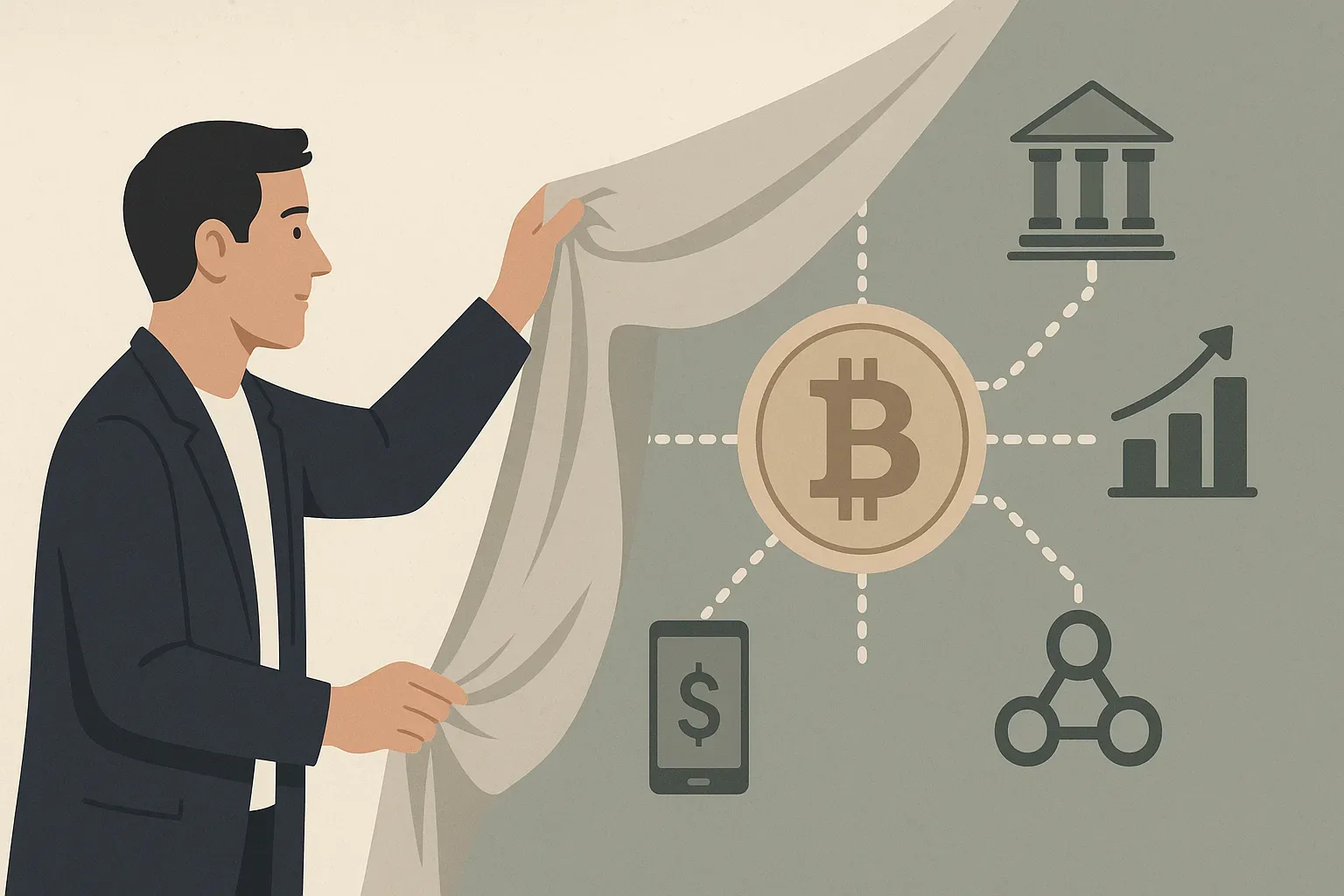
Decentralized Finance, commonly known as DeFi, represents a significant change in how financial services are accessed and delivered. This content explains DeFi, detailing its core principles, practical applications, and the major impact it has on financial services, providing practical information for understanding and engaging with this changing crypto sector.
Decoding DeFi: What is Decentralized Finance?
Decentralized Finance refers to an ecosystem of financial applications built on blockchain networks, primarily Ethereum. Unlike traditional finance (TradFi) where institutions like banks, exchanges, and lending companies act as central authorities, DeFi operates on a peer-to-peer basis through automated self-executing contracts called smart contracts. These smart contracts are programmed to enforce agreements directly, transparently, and immutably, removing the need for human intermediaries. The fundamental change DeFi brings to traditional financial services is the removal of these gatekeepers. This means that anyone with an internet connection and a crypto wallet can access financial products, regardless of their location, credit score, or socioeconomic status. DeFi is open, permissionless, and global, allowing users to engage in activities like lending, borrowing, trading, and insurance with high transparency and efficiency. The underlying blockchain ensures that all transactions are recorded publicly and cannot be altered, fostering a new level of trust through verifiable code rather than relying on institutional reputations.
The Building Blocks of DeFi: Important Protocols and Services
The DeFi ecosystem is a vibrant network of interconnected protocols and services, often referred to as money legos due to their composable nature. These components work together to form a complete set of financial tools. Stablecoins are foundational, acting as cryptocurrencies pegged to a stable asset like the US dollar, mitigating the volatility inherent in other cryptocurrencies and making DeFi services more practical for everyday use. Oracles are essential for bringing real-world data, such as asset prices, onto the blockchain so that smart contracts can execute based on accurate external information. Among the main applications, lending and borrowing protocols like Aave and Compound allow users to deposit crypto assets as collateral to borrow other assets, or to lend their assets to earn interest. Decentralized Exchanges, or DEXs, such as Uniswap and Curve, enable the swapping of various cryptocurrencies directly between users without a centralized order book or intermediary. Yield farming is a strategy where users leverage various DeFi protocols to maximize returns on their crypto holdings, often involving providing liquidity to DEXs or staking assets. Liquid staking allows users to stake their cryptocurrencies on a proof-of-stake blockchain while still retaining liquidity through a derivative token. Other applications include decentralized insurance, which protects users against smart contract exploits or stablecoin de-pegging, and asset management platforms, offering decentralized investment strategies.
DeFi vs. TradFi: A Paradigm Shift in Finance
Comparing DeFi and Traditional Finance reveals a stark contrast and highlights the paradigm shift DeFi represents. In TradFi, access is often restricted by geographical boundaries, credit checks, and extensive Know Your Customer (KYC) requirements, excluding a significant portion of the global population. DeFi, in contrast, offers global, permissionless access to anyone with a compatible crypto wallet, fostering financial inclusion. Transparency is another major differentiator. Traditional financial systems are often opaque, with limited visibility into institutional operations. DeFi operates on public blockchains where all transactions are recorded and auditable, bringing great transparency. Speed and cost are also profoundly different. Traditional banking transactions can take days and incur significant fees, especially for international transfers. DeFi transactions, while subject to network fees (gas), are typically much faster, often settling within minutes. Control over assets is perhaps the most significant divergence: in TradFi, users entrust their funds to banks or custodians, relinquishing direct control. In DeFi, users maintain self-custody of their assets through non-custodial wallets, giving them direct sovereignty. DeFi, with its open-source nature and composable money legos, fosters rapid, collaborative innovation, allowing new protocols to build upon existing ones quickly.
Benefits for Users: Why People are Flocking to DeFi
Users are increasingly flocking to DeFi for a compelling array of benefits that address many shortcomings of traditional finance. One primary appeal is financial inclusion. Billions of people globally are unbanked or underbanked, lacking access to basic financial services. DeFi offers a pathway for these individuals to participate in a global financial system without needing a traditional bank account or credit history. Many DeFi protocols offer significantly higher yields on deposits compared to traditional savings accounts, attracting users seeking better returns on their capital. The transparency inherent in blockchain technology means that all transactions are recorded publicly and are verifiable, fostering trust that is absent in opaque traditional systems. Autonomy and self-custody are also major draws. Users retain full control over their assets, managing their funds directly through their wallets rather than entrusting them to third-party institutions. The composability of DeFi, often termed money legos, allows protocols to be combined and leveraged in innovative ways, creating sophisticated financial products that are difficult to replicate in TradFi. In addition, the efficiency of automated smart contracts reduces the need for costly intermediaries, potentially leading to lower fees and faster service for many financial operations.
Understanding the Risks: Smart Contracts, Volatility, and Regulation
While DeFi offers numerous advantages, users must understand its inherent risks. Smart contract risks are most important. These contracts, being code, can contain bugs, vulnerabilities, or be exploited by malicious actors, leading to significant financial losses for users interacting with them. Even audited contracts are not entirely immune. Market volatility is another major concern. The prices of cryptocurrencies, including those used as collateral in DeFi protocols, can fluctuate wildly. Sudden price drops can lead to liquidations of collateralized loans if the value of the collateral falls below a certain threshold. Impermanent loss is a specific risk faced by liquidity providers on decentralized exchanges, where the value of their deposited assets can diverge from simply holding them, potentially leading to losses during volatile periods. Regulatory uncertainty is also a significant factor. The rapidly evolving nature of DeFi means that governments and financial authorities are still developing frameworks, and new regulations could impact the legality or operational aspects of certain protocols. Other risks include oracle manipulation, where external data feeds can be compromised, leading to incorrect smart contract execution. In addition, the space is unfortunately susceptible to scams and rug pulls, where fraudulent projects disappear with investors' funds.
Getting Started with DeFi: Practical Information for New Entrants
For new entrants looking to explore DeFi, a practical and cautious approach is necessary. The first prerequisite is to understand the basics of cryptocurrency and blockchain technology, including how a crypto wallet functions. Popular non-custodial wallets like MetaMask are often the gateway to interacting with DeFi protocols. Begin by conducting thorough research and educating yourself on the specific protocols you intend to use. It is wise to start small, investing only what you can afford to lose. Funding your crypto wallet with base assets, typically a major cryptocurrency like Ethereum (ETH) and stablecoins such as USDC or DAI, which are used to pay for transactions and engage with protocols, is the next step. Once your wallet is funded, you can connect it to a reputable DeFi protocol. Always pay close attention to transaction fees, known as gas fees on Ethereum, which can vary significantly depending on network congestion. Follow security best practices: secure your wallet's seed phrase offline and never share it, consider using a hardware wallet for larger holdings, and regularly review and revoke any smart contract permissions you've granted to protocols you no longer use. Starting with small, simple actions and gradually expanding your engagement as your understanding grows is the safest path.
DeFi's Role in the Crypto Market: Current Impact and Future Outlook
DeFi has already had a profound impact on the broader cryptocurrency market, driving significant demand for underlying blockchain networks and fostering rapid innovation. It provides tangible utility for cryptocurrencies, moving beyond speculative investment to functional financial applications, thereby expanding crypto adoption. The total value locked (TVL) in DeFi protocols is an important metric, demonstrating the substantial capital flowing into the ecosystem and its growing importance. Scalability remains a hurdle for many networks, leading to high transaction fees and slow speeds during peak demand. User experience can still be complex and unintuitive for newcomers, hindering broader mainstream adoption. Regulatory clarity is still evolving, which can create uncertainty for both developers and users. Looking to the future, DeFi is poised for continued growth and evolution. We can expect increased institutional adoption as traditional financial players begin to integrate DeFi solutions. Layer 2 scaling solutions will likely enhance transaction speeds and reduce costs, making DeFi more accessible. The development of decentralized identity solutions could bridge the gap between anonymous blockchain interactions and the need for verifiable credentials. The tokenization of real-world assets (RWAs) onto the blockchain, such as real estate or commodities, promises to bring greater liquidity and accessibility to traditional assets. In addition, advancements in cross-chain interoperability will enable smooth interaction between different blockchain networks, expanding DeFi's reach beyond single ecosystems. DeFi's evolving journey is just beginning, promising a more open, efficient, and inclusive global financial future.